https://www.europeana.eu/item/07101/O_6703
History of The Feast Day
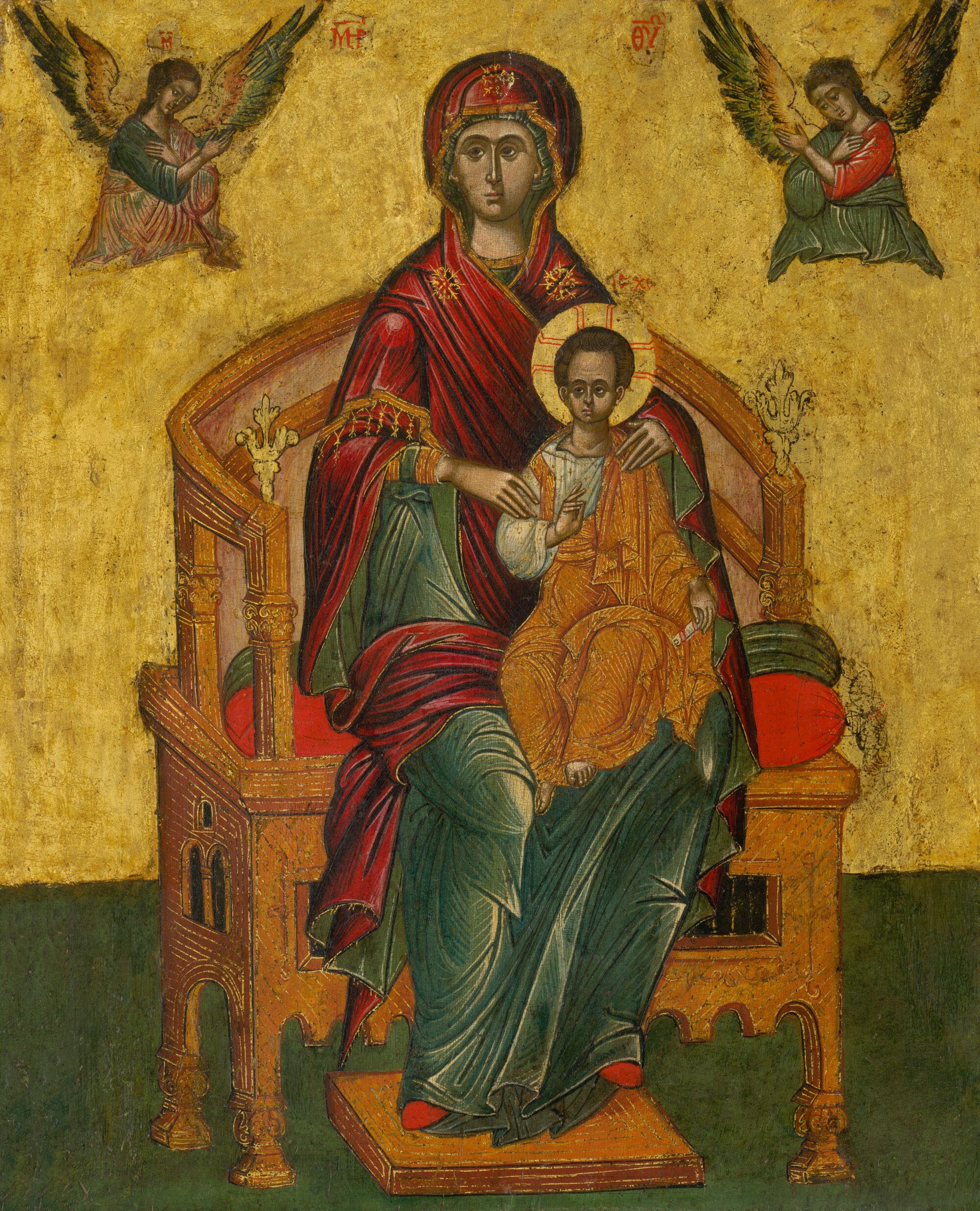
By pronouncing, “Behold, I am the handmaid of the Lord. May it be done to me according to your word,” Mary solidified her unwavering dedication to God and stamped her place in salvation history (Luke 1:38). Mary is venerated in multiple different Christian denominations and churches. For the most part, these include Catholic and Orthodox churches. The Catholic Church highly respects and honors Mary as the Mother of Jesus, celebrating multiple feast days throughout the year. January 1st marks the solemnity of the Virgin Mary. This specific feast day celebrates Mary’s “yes” to accepting the role as Jesus’s mom. In English, Mary has the title of Mother of God, while this was translated from Mater Dei in Latin and adapted from Theotokos in Greek, which means bearer of God. Multiple biblical passages in the New Testament support these theological principles regarding Mary’s role, and the Old Testament even prefigures them.
Mary in the Bible.
Genesis 3:15 – Protoevangelium
The protoevangelium, as scholars refer to it, prophesies Mary’s role in Genesis. God punishes Adam and Eve for their disobedience. In Genesis 3:15, God communicates with the serpent.
I will put enmity between you and the woman,
and between your offspring and hers;
They will strike at your head,
while you strike at their heel.
When God says the word “woman,” theologians suggest that he is addressing Eve and Mary. Luke 1:38 portrays Mary as the “new Eve,” whose obedience stands in stark contrast to Eve’s disobedience. The mention of the woman’s offspring is also seen as a reference specifically to Christ, but also to Christians, who are the adopted brothers and sisters of Christ.
John 19:26-27 – Our Adoptive Mother
Some Christian denominations struggle with the views that Catholics hold about Mary. But we only need to reference the scriptures to see Mary as Jesus sees her. While on the Cross, Jesus initiated a relationship between us and Mary. John 12:26-27 states:
26 When Jesus saw his mother* and the disciple there whom he loved, he said to his mother, “Woman, behold, your son.”
27 Then he said to the disciple, “Behold, your mother.” And from that hour the disciple took her into his home.
Jesus and John were clearly born from different women. Jesus even states that John is his “disciple.” However, upon his death, Jesus names John Mary’s son and Mary John’s mother. Does this mean that John had to disown his biological mother? Absolutely not. However, this biblical chapter forms a new kinship between Mary and the followers of God. Since then, we have had Mary as a spiritual mother to whom we can turn for guidance, solace, and intercession.
Revelation 12:1-5, Queen of Heaven
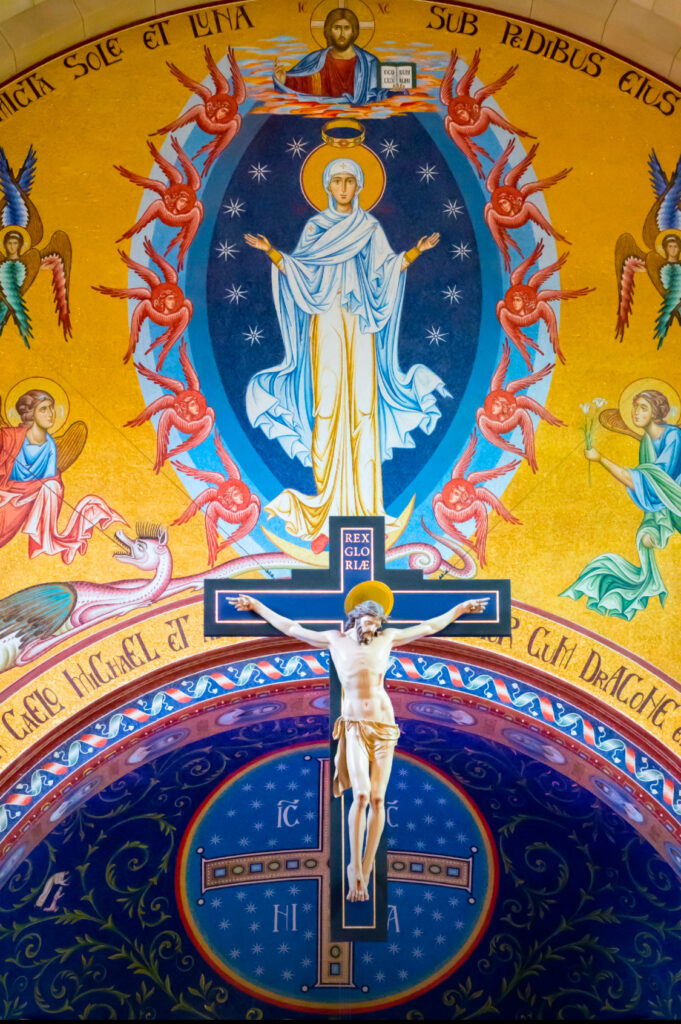
1 A great sign appeared in the sky, a woman* clothed with the sun, with the moon under her feet, and on her head a crown of twelve stars
2 She was with child and wailed aloud in pain as she labored to give birth.*
3 Then another sign appeared in the sky; it was a huge red dragon,* with seven heads and ten horns, and on its heads were seven diadems.
4 Its tail swept away a third of the stars in the sky and hurled them down to the earth. Then the dragon stood before the woman about to give birth, to devour her child when she gave birth.
5 She gave birth to a son, a male child, destined to rule all the nations with an iron rod.* Her child was caught up to God and his throne.
In Revelation 12:1–5, Mary emerges as a luminous figure, a pivotal symbol in salvation history. She is crowned with twelve stars, which represent Israel, showing her queenship over the church. Her labor points to her role in bringing forth Jesus, the messiah destined to “rule all the nations with an iron rod” (v. 5). Mary stands at the heart of the battle between good and evil in this heavenly struggle as the dragon seeks to destroy her child. As the new Eve, her maternal “yes” is a rallying cry from the Mother of the Redeemer and the church. This vision suggests Mary’s missionary role in subsequent church history, considering her numerous apparitions throughout history, including the one John experienced in revelation. She is a shining example of how God’s love will triumph over evil.
Devotion to Mary
We can learn a lot from the life of our spiritual mother. We can learn from her obedience and trust. Given the biblical references that show Mary’s importance and her role as our spiritual parent. Like Mary, we can be obedient to God and say “yes” when he asks us to do tasks that might sometimes seem impossible. We can trust in his plan that we are capable of fulfilling the duties he asks of us for the church and in life. The Catholic faith has a strong devotion for Mary for these reasons, and we can integrate her into our spiritual life in many ways. There are many Marian devotions, but praying to her in the rosary is one of the most common ways. When we do this, we meditate on Jesus’s life in the gospels while also fulfilling biblical prophecy when she says, “Behold, from now on will all ages call me blessed” (Luke 1:48). In the rosary, we repeat the words of the Archangel Gabriel when he says, “Hail, favored one! The Lord is with you” (Luke 1:28). Let’s take this Solemnity of Mary, Mother of God, as an opportunity to thank our Mother for all she has done for the church. Mother Mary, pray for us!